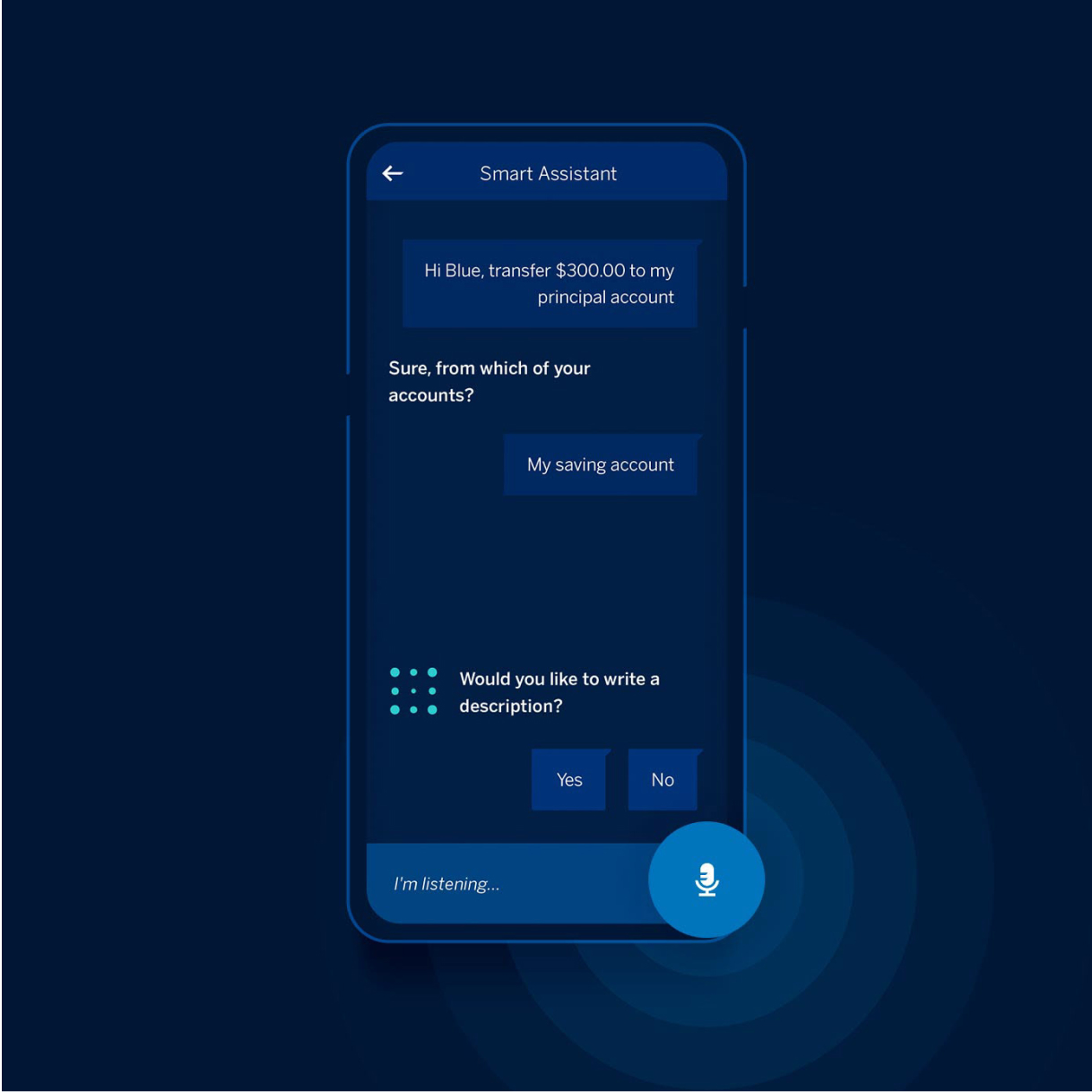
I designed and pitched BBVA's conversational AI assistant, the first of its kind in banking. It let users manage their finances by chatting, and cut call-center waits from 7 minutes to under 1.
BBVA, a bank founded in 1857, began its digital transformation in 2009. In 2015, the team I was part of revamped BBVA's mobile app and web platform. It went on to be named "best banking app in the world" by Forrester for three years running, and the App Store rating climbed from 1.8 to nearly 3 stars.
But success created a new problem. A segment of users, especially those with low digital literacy in rural areas, disliked the shift to a digital-first bank. They hit technology barriers, missed talking to agents at their local branches, and ended up contacting agents over WhatsApp or overloading the call centers.
Who I designed for
I researched the two ends of the digital-literacy spectrum, and deliberately skipped the satisfied middle who were already happy with the apps:
People with low digital literacy in Mexico, who avoid digital platforms out of difficulty.
Early adopters in Spain, who embrace new technology out of curiosity.
Goals
Let people with low digital literacy manage their finances through conversation, expanding what the mobile app could do.
Add a new customer-service channel and cut call-center wait time.
Grow BBVA's AI capability and position it as a tech company, not just a bank.
Why a conversation
After working on the app and web relaunch, I realized that even a perfectly designed app wouldn't work for everyone. Some people are intimidated by traditional digital interfaces no matter how clean they are. They needed a different kind of interaction, and conversation was it.
Project gallery
No items found.
A deliberately messy process
There were no precedents and no off-the-shelf tools for designing a conversational banking interface in 2017, so the process was iterative and non-linear. I planned it with my mentor Jonah Burlingame and researcher Grace Auscuasiati, and we learned by testing with real users every two weeks (the Sense & Respond two-week learning cycle), with engineers and PMs watching.
Started from an old, rejected idea and brainstormed around it.
Bodystorming: theatrical improv with scripts to align stakeholders and design the voice and text patterns from scratch.
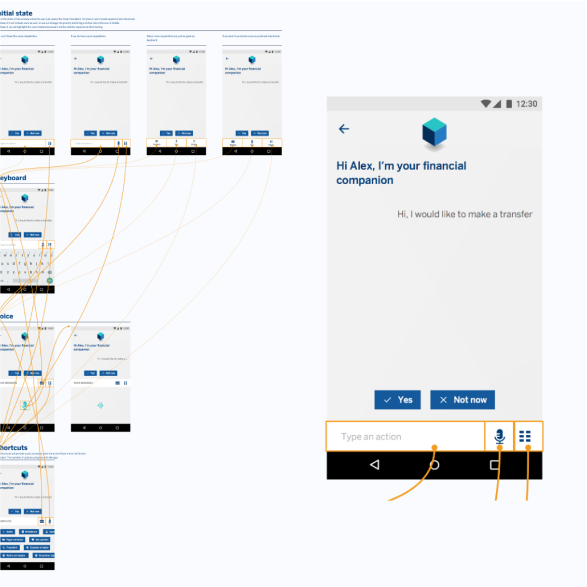
Turned video scenarios into wireframes to raise fidelity.
User testing round 1 taught us the always-on microphone confused people, so we went keyboard-first.
User testing round 2 taught us that numbers overwhelmed users (so we used graphics) and that jokes felt wrong for finance (so we kept it serious).
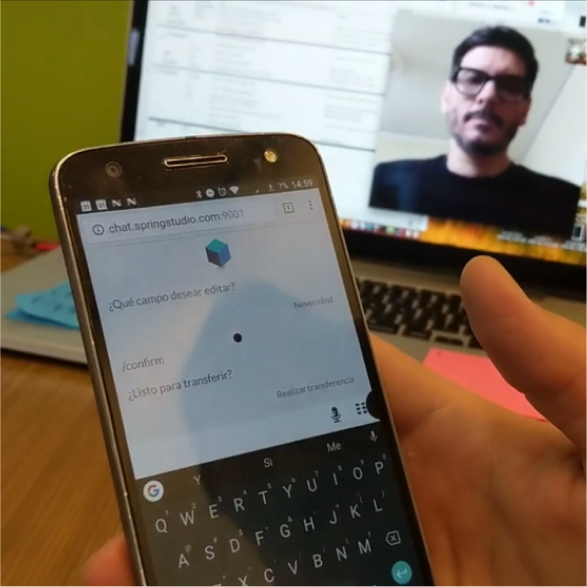
Wizard of Oz testing.
Expanded the design system with new visual components.
Emotional design: giving the avatar, Blue, a personality.
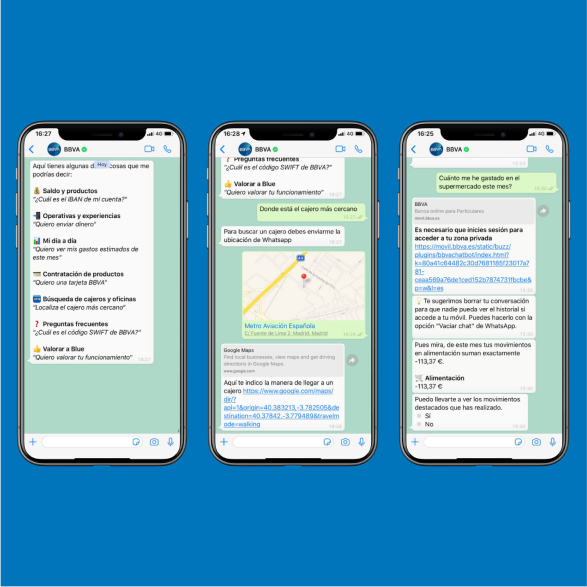
Prototyped at scale with supervised deep learning in WhatsApp.
I prototyped in Origami Studio and worked closely with data scientists on NLP, which was cutting-edge at the time. This was the first BBVA project built by a team spread across five offices, San Francisco, Dallas, Mexico, Spain, and Turkey, and we ended up creating a model for how to collaborate as a global bank.
The outcomes
Customer service wait time dropped from about 7 minutes on the call center to under 1 minute with the assistant.
BBVA became the first financial institution to offer services inside WhatsApp and Amazon Alexa.
The recommender-system work seeded BBVA's AI Factory, which grew into a unit of 400+ data scientists and ML engineers.
Success metrics
108,000+ conversations in the first week.
App Store rating rose from 2.9 to 4.6 stars in 6 months.
73% of conversations were marked "useful" in exit surveys.
Launched in 14 countries, and still a top feature of the app, in use as of 2025.
How the model scaled past me
I designed Blue for two user groups and a first set of jobs-to-be-done. After launch, other teams carried the same conversational model into more countries and more use cases, the same originate-then-scale pattern I'd later repeat at roles in other companies. What we started, became infrastructure the whole bank built on for many different products.
Constraints
Designing a conversational interface with no prototyping tools made for the job forced us to adapt other tools and invent our own methods.
An international team meant over-communicating and documenting every handoff carefully.
The best people are the busiest, so I had to make a strong case to stakeholders to get the experts I needed on the project.
Takeaways
Constant communication with stakeholders matters, and taking time to understand what other people do turns them into allies.
Keep rejected ideas in your back pocket. Blue started as a rejected idea.
Progress matters more than process.
Curious about the full story?
Schedule a call and I'll walk you through my portfolio